
A practical guide for bulk stock owners
Good storage protects the lot after it leaves the supplier
Makhana is a crisp popped product. Once packed, exposure to moisture, damaged seals, damp storage areas or poor warehouse handling can affect its texture and condition. Storage should therefore be considered part of the buyer's quality-control process, not an afterthought after delivery.
There is no single storage instruction or shelf-life number that should be applied to every makhana product. The appropriate requirements depend on the product form, lot condition, moisture result, packaging barrier and handling conditions. Use the information supplied for the specific lot and pack.
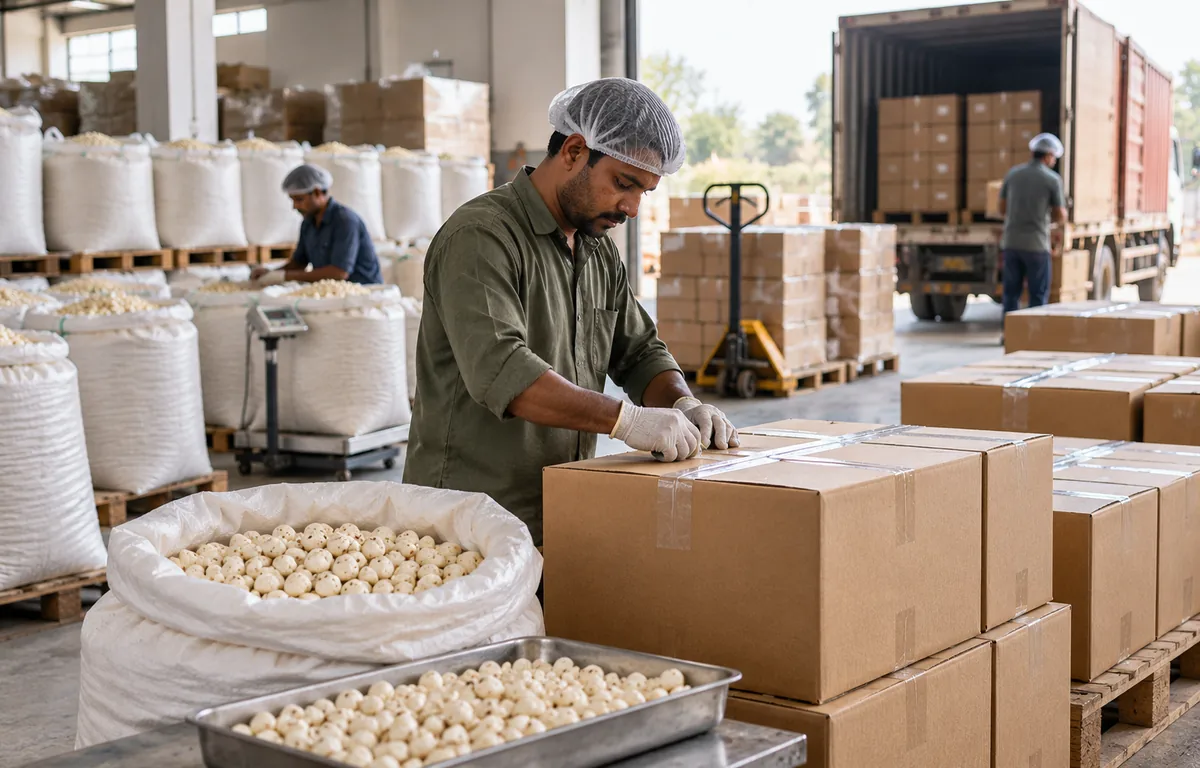
Makhanley's plain bulk supply is packed in food-grade inner bags in 10 kg batches, air-sealed and placed inside protective outer sack bags. Confirm final packing details and the relevant lot information before dispatch.
01 · Goods receiving
Inspect the shipment when it arrives
Check the outer sacks or cartons before moving the stock into storage. Look for tears, punctures, wet patches, evidence of exposure to rain or water, pest activity and signs that the load has been mishandled. Check that the inner bags remain sealed and that the received quantity and lot identification match the purchase documents.
Record the receipt date, lot or batch reference, package count and any visible transit damage. Photograph any issue and notify the supplier or carrier promptly under the agreed delivery terms. Retain a reference sample from the received lot where your quality procedure requires it.
02 · Storage environment
Use a clean, dry and protected storage area
Store unopened makhana in a clean, dry area protected from rain, leaks, condensation, steam and other sources of moisture. Keep the stock away from direct sunlight and avoid locations where temperature or humidity changes can cause condensation on packs or surrounding surfaces.
The storage area should be protected against pests and kept separate from chemicals, cleaning agents, fuels, strong-smelling materials and other products that could contaminate the food or transfer odours. Maintain good housekeeping and inspect the area routinely.
Do not set a universal temperature or relative-humidity target unless it is supported by the product specification, packaging validation or a documented storage study for the actual product.
03 · Pack protection
Keep the inner pack sealed and protect it from moisture ingress
For plain bulk orders, Makhanley uses food-grade inner bags in 10 kg batches, air-sealed and placed inside protective outer sack bags. The outer sack is useful for handling and protection, but the condition of the inner bag and its seal remains important.
Keep unopened inner bags sealed until the product is required. Avoid cutting or puncturing the inner packaging while opening outer sacks or moving stock. Once a bag is opened, transfer the remaining product only into a clean, suitable food-grade pack that can be closed securely and protects the product from surrounding moisture.
For private-label, roasted or flavoured formats, discuss the product-specific packaging barrier, seal and pack size before production. The correct packaging choice depends on the product and intended distribution conditions.
Related: Review the private-label packaging options or the bulk buyer's quality checklist.
04 · Warehouse handling
Keep stock off the floor and prevent pack damage
Place bags on clean, dry pallets or suitable racking rather than directly on the floor. Leave enough clearance for cleaning and inspection, and avoid placing stock against damp walls, leaking pipes or external doors where rainwater can enter.
Stack according to the strength and handling instructions of the outer packaging. Do not create stacks that crush lower bags, distort the inner packs or make the stock unstable. Keep aisles clear so staff can inspect lot labels and rotate stock without repeatedly moving or damaging packages.
Use clean handling equipment and ensure that the surfaces contacting the outer packaging are dry and free of contaminants. If an inner bag is punctured, wet or no longer securely closed, segregate it for inspection rather than returning it automatically to saleable stock.
05 · Lot control
Track each lot separately and rotate stock consistently
Maintain a stock record for each lot. At minimum, record supplier, product form, grade, lot or batch identifier, receipt date, quantity, applicable moisture/test report, packaging description and any agreed best-before or shelf-life information.
Use first-in, first-out (FIFO) to avoid leaving older stock behind newer deliveries. Where a defined best-before date applies, use a first-expiry, first-out (FEFO) control so the earliest applicable date is considered first. FIFO and FEFO should not override a quality hold or an adverse inspection result.
Keep the sample, approved specification, laboratory report and purchase order linked to the same lot reference. This makes it easier to investigate a difference between the approved sample and stock held in the warehouse.
06 · Transit and delivery
Protect the load between dispatch and receiving
Use clean, dry and weather-protected transport. The vehicle or container should not expose the product to rainwater, damp floors, leaking roofs, strong odours or chemicals. Keep the load secured so bags do not shift, tear or become crushed in transit.
At delivery, check the outer packaging and seals before accepting the load. For international shipments, agree the required export packaging, container cleanliness, moisture protection, marks and destination-market requirements before shipment. Any special transport or storage requirement should be recorded in the order specification.
Makhanley dispatches bulk orders from Adhloam, Darbhanga and states a Pan-India delivery window of 5–7 working days after order confirmation, subject to the confirmed order and logistics plan. See the bulk supply process for ordering details.
07 · Shelf life
Do not assume one shelf-life period applies to every lot
Shelf life depends on the product form, initial lot condition, moisture, processing, packaging material, barrier performance, seal integrity and the conditions experienced during storage and distribution. Plain popped makhana, roasted or flavoured products and products packed in different formats should not automatically be assigned the same shelf life.
Ask the supplier for the applicable best-before or shelf-life information for the exact product and packaging configuration. Confirm the date marking, test basis and storage instructions applicable to that pack. Do not create or extend a shelf-life claim based only on a general statement about makhana.
Makhanley's confirmed 5–6% moisture specification applies to standard export grades. Domestic moisture varies by lot. A moisture result is one quality parameter; by itself it does not establish the complete shelf life of the product.
08 · Sample traceability
Keep the approved sample linked to the actual bulk lot
For a specific bulk order, Makhanley draws the approval sample from the available lot proposed for that order. Once the buyer approves the sample, the bulk order is supplied from that same approved lot. Makhanley does not send a sample from one lot and fulfil the bulk order from a different lot.
Record the lot reference on the sample approval, purchase order and receiving record. This supports traceability if the buyer needs to check the delivered stock against the agreed sample or lot specification.
Buyers can order the customisable sample kit online to compare grades. For a particular order, use a lot-specific approval sample and the quality checklist to define the acceptance points.
09 · Quick checklist
Bulk makhana storage checklist
- Inspect outer packaging, inner seals and lot labels at receipt.
- Record receipt date, lot reference, quantities and test information.
- Store in a clean, dry, pest-protected and odour-free area.
- Keep stock off the floor on clean, dry pallets or racking.
- Protect bags from water, steam, condensation and direct sunlight.
- Keep unopened inner packs sealed and reseal opened packs appropriately.
- Prevent punctures, crushing and unstable stacking.
- Track lots separately and apply FIFO/FEFO controls.
- Retain the approved sample, lot report and written specification.
- Follow the specific product's best-before and storage instructions.
For the quality criteria to check before purchase, use the Makhana quality parameters checklist. For pricing and ordering, see the wholesale price guide or bulk supply page.
Common questions
Bulk makhana storage: FAQs
How should makhana be stored after delivery?
Keep makhana in its sealed, food-grade packaging in a clean, dry and protected storage area. Avoid exposure to water, damp floors, direct sunlight, steam, strong odours and pests. Follow the storage instructions and best-before information applicable to the product and lot.
How can I keep makhana crispy in bulk storage?
Protect the product from moisture ingress. Keep unopened inner bags sealed, reseal opened packs promptly with suitable food-grade moisture-protective packaging, and avoid storing the product in damp or humid conditions. Crispness depends on the product and the storage and packaging conditions.
What packaging does Makhanley use for plain bulk makhana?
Plain bulk makhana is packed in food-grade inner bags in 10 kg batches, air-sealed and placed inside protective outer sack bags. Confirm the final packing configuration against the quotation and order.
Does Makhanley guarantee one fixed shelf life for every makhana lot?
A single shelf-life figure should not be assumed for every product and lot. Shelf life depends on the product, lot condition, moisture, packaging barrier, seal integrity and storage conditions. Confirm the applicable shelf-life information and best-before details for the lot and pack being supplied.
Is the 5–6% moisture specification applicable to domestic bulk makhana?
No. The confirmed 5–6% moisture specification applies to Makhanley standard export grades. Domestic moisture values vary by lot and should be confirmed from the applicable lot-specific result and agreed specification.
Can I get the sample and bulk order from the same makhana lot?
Yes. For a specific bulk order, the approval sample is drawn from the available lot proposed for that order. Once approved, the bulk order is fulfilled from that same approved lot; Makhanley does not use a different lot for the bulk order.