

Specify the actual lot before you approve an export order
Whether you are a food importer, wholesale distributor, snack manufacturer or private-label brand, the supplier you choose has a direct effect on your product quality, selling price and customer experience. A good sample is only the starting point. You also need to know how the bulk lot is graded, tested, packed and stored before it reaches your warehouse.
An export quotation is only useful when buyer and supplier agree what the lot must contain and how acceptance will be checked. “Premium quality” is not a specification. Record the Suta grade, size distribution, whole and broken kernels, cleanliness, moisture, test parameters, packaging and destination requirements in writing.
Makhanley supplies plain white popped makhana in four core commercial grade groups: 3, 4/4+, 5/5+ and 6+ Suta. For export, the stated moisture specification is 5–6%, confirmed through lot-specific testing. Domestic moisture values vary by lot and should not be treated as the export specification.
For a buyer-specific bulk order, the approval sample is drawn from the available lot proposed for fulfilment. Once approved, the bulk order is supplied from that same lot. This guide explains the details to agree before the order is confirmed.
01 · Product specification
Define the product and export-lot specification
Before the sample is prepared, buyer and supplier should agree the product form and the specification against which the lot will be reviewed. A quotation should identify the goods as plain white popped makhana or another clearly described format, not simply “makhana”.
Record these details in the purchase specification
- Product form: plain white popped makhana, roasted, flavoured or another agreed form.
- Grade: 3, 4/4+, 5/5+ or 6+ Suta, with the agreed size reference.
- Physical quality: acceptable whole/broken kernel mix, appearance, cleanliness, foreign matter and odour requirements.
- Moisture and tests: the target moisture, test panel, laboratory report and how results will be tied to the lot.
- Packing and delivery: pack material, net weight, sealing, destination, shipment mode and required dispatch window.
Where the buyer needs numerical tolerances for breakage, foreign matter, colour or size distribution, state them in writing before sample approval. Do not assume an unspoken tolerance or treat the grade name as a complete quality specification.
Makhanley’s processing facility is in Adhloam, Darbhanga, Bihar. Read the Makhana from Bihar sourcing guide for regional context, and use the bulk supply page for commercial ordering information.
02 · Freshness and condition
Freshness is a measurable condition, not a marketing label
Popped makhana is a dried and processed food product, not fresh produce like fruit or vegetables. In wholesale and export buying, “fresh” should describe the product's condition and handling: recent processing or packing where confirmed, correct moisture, crispness, clean appearance, suitable storage and a properly sealed pack.
Makhana can absorb moisture from its surroundings. If bags are left open, stored in damp conditions or packed in material that does not provide sufficient protection, the kernels can lose crispness. That is why buyers should ask about the packing date, lot number, moisture result and storage conditions—not rely on the word “fresh” alone.
Ask for the lot or packing date and batch identification.
Makhanley's stated export moisture specification is 5–6% across standard grades.
Keep the original sealed pack in a cool, dry and hygienic place.
At Makhanley, the export lot is cleaned, graded, inspected and laboratory-tested before dispatch. Buyers can discuss the grade, packaging and destination requirements before the lot is finalised.
03 · Product formats
Confirm the product format before sampling
Different buyers need different product formats. A wholesaler may want plain white popped makhana in bulk, while a snack brand may prefer ready-to-eat roasted or flavoured makhana in its own packaging.
 Plain white popped makhana
Our main bulk product, cleaned and graded in 3, 4/4+, 5/5+ and 6+ Suta.
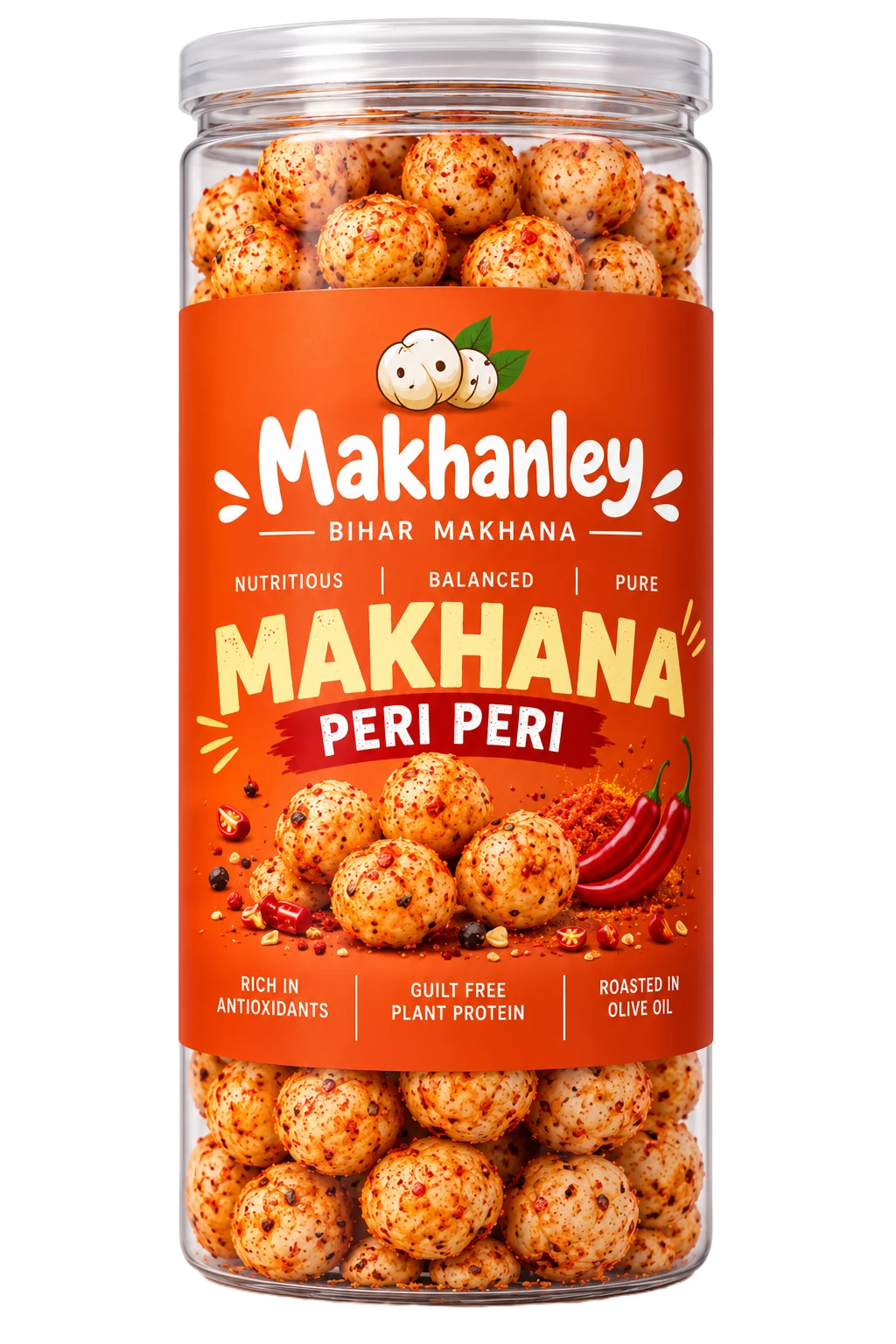 Roasted makhana
Ready-to-eat format for snack businesses and retail brands.
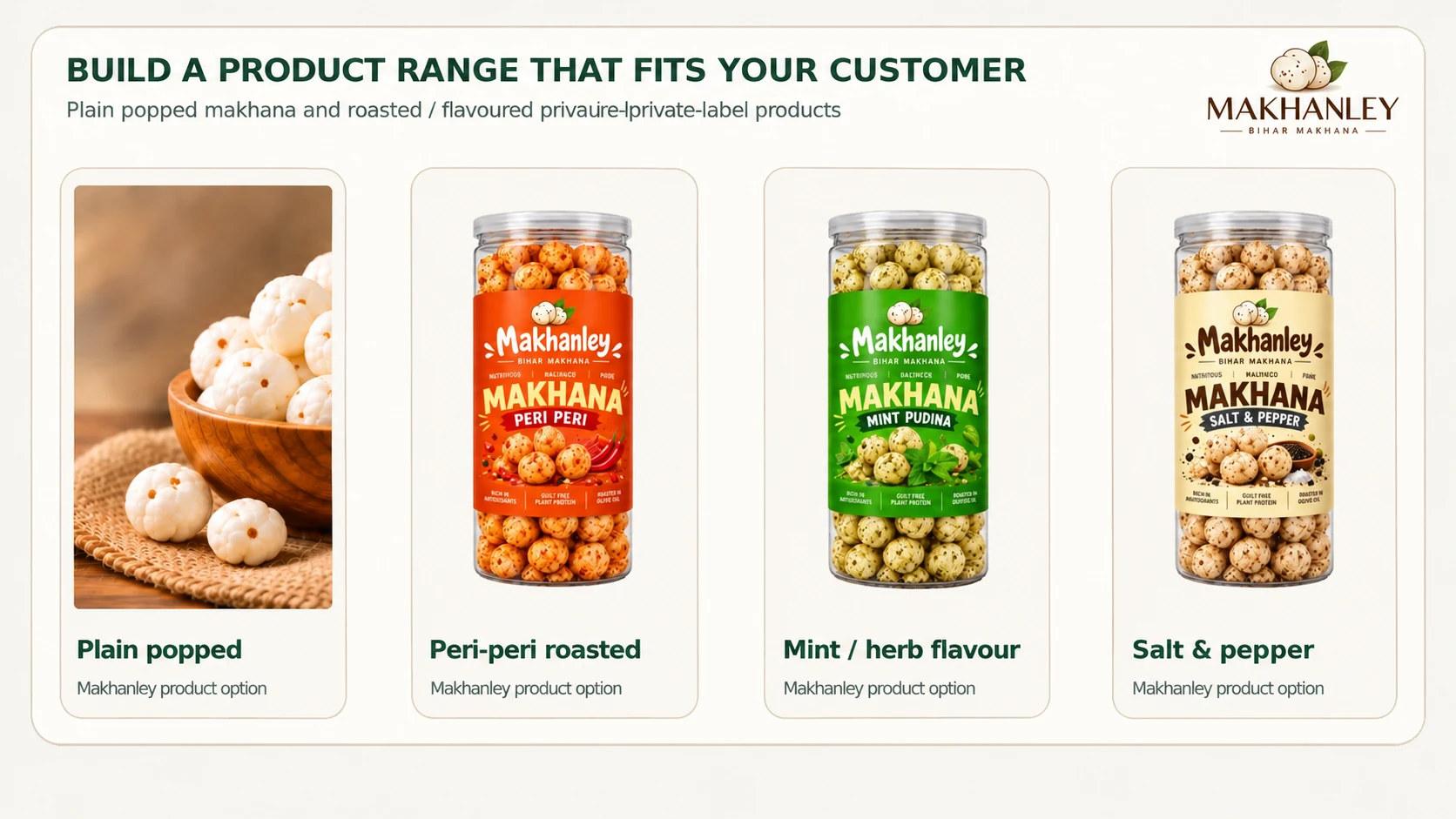 Flavoured makhana
Seasoned options for businesses developing their own snack range.
 Private-label supply
Roasted and flavoured products with customised branding and packaging.
What about raw seeds, powder and flakes?
Raw unpopped seeds, makhana powder and flakes are different product forms from our standard plain popped makhana range. If you require these formats for an ingredient or manufacturing application, mention the exact requirement so availability can be confirmed separately; do not assume they are standard ready-to-ship stock.
Explore Makhanley bulk supply → · Explore flavoured makhana →
04 · Grades and size distribution
Agree Suta grade and size distribution
Suta is a common commercial size reference used in the Bihar makhana trade. A higher Suta generally refers to a larger popped kernel, but size alone does not prove overall quality. Buyers should also agree on whole-kernel percentage, breakage, colour, cleanliness, moisture and the acceptance process.
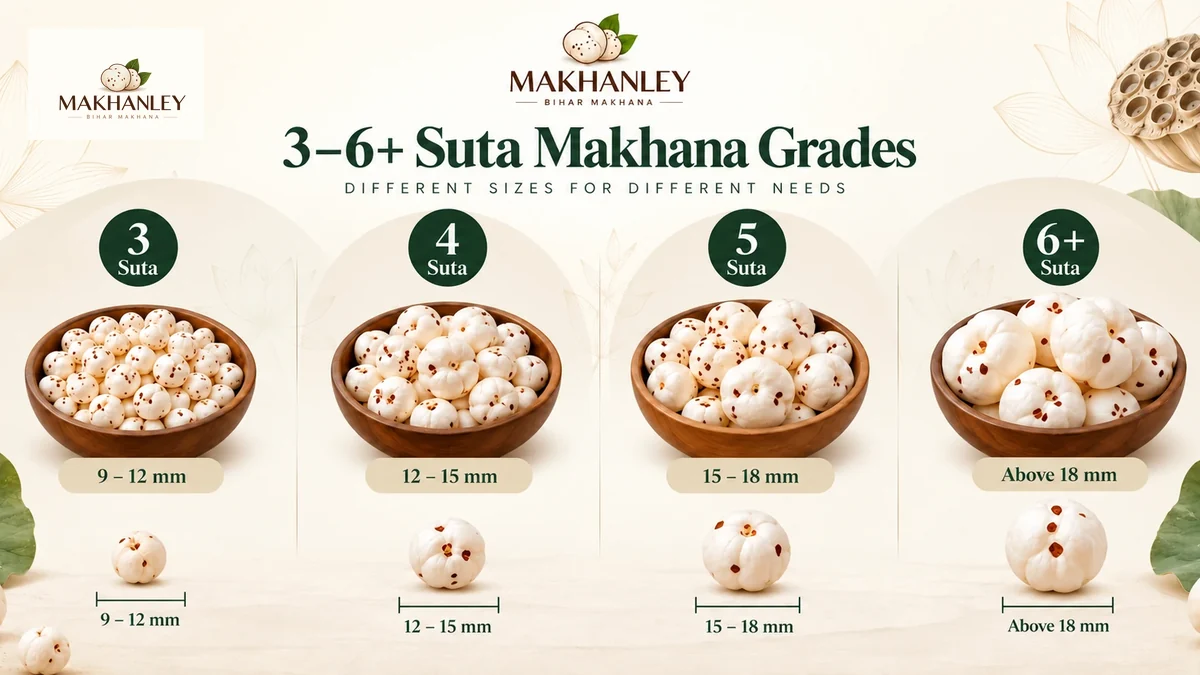
| Grade | Indicative kernel size | Common buyer use | Typical selection focus |
|---|---|---|---|
| 3 Suta | 9–12 mm | Ingredients and processing | Uniform small kernels and cost fit |
| 4 Suta | 12–15 mm | Wholesale, roasting and snack use | Medium size and expansion |
| 5 Suta | 15–18 mm | Retail packs and premium snacks | Whole-kernel appearance and uniformity |
| 6+ Suta | Above 18 mm | Premium presentation and larger-kernel packs | Large kernels and lower visible breakage |
These are Makhanley's indicative commercial size references. The actual distribution within a lot and acceptable tolerances should be confirmed before order. A 6+ kernel is larger than a 4 Suta kernel, but it is not automatically cleaner, crisper or more suitable for every application. Buyers looking for grade-specific bulk details can review our 3 Suta supply, 4/4+ Suta grade page, 5/5+ Suta wholesale option and 6+ Suta commercial range.
05 · Quality assurance and lot testing
Quality parameters and laboratory testing for each lot
A wholesale quotation should not simply say “premium export quality”. Importers need to understand how the offered lot is checked and what evidence is available for that shipment.
What Makhanley checks
- Grade and size: The lot is sorted against the agreed Suta grade and buyer requirement.
- Whole and broken kernels: Visible breakage and product appearance are reviewed against the agreed specification.
- Cleanliness: Cleaning and physical inspection are carried out at our Darbhanga facility.
- Moisture: Our export specification is 5–6% across the standard Suta grades, with lot testing.
- Laboratory testing: Every export lot is laboratory-tested; the lot report identifies the parameters tested and the results for that shipment.
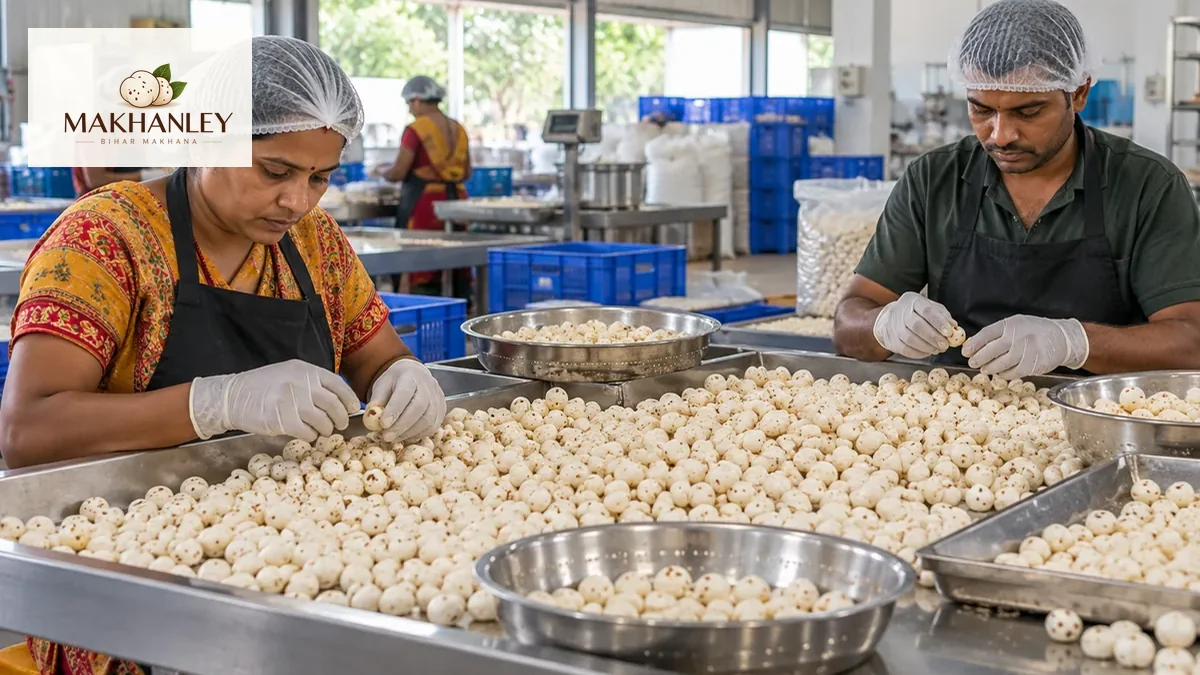
Laboratory tests and the lot report
Depending on the product, buyer specification and destination-market requirements, the test panel may address moisture, microbiological quality (for example, Salmonella, E. coli, yeast and mould), pesticide residues, heavy metals and other relevant contaminants. The exact parameters should be read from the report for the actual lot rather than inferred from a generic supplier statement.
Using an Indian Standard as a reference
IS 3155:1965 is an Indian Standard titled Specification for Makhanna Products. It may be relevant when preparing a product specification, but a general reference to the standard does not prove that a particular lot has been tested against every applicable requirement or that the product holds a BIS licence. The actual laboratory report and the test parameters for the identified lot must support any such statement.
For a commercial order, ask for the test report relating to the actual lot, the laboratory details, parameters tested, test date and results. Additional destination-specific testing can be discussed before the quotation is finalised.
06 · Lot records and traceability
What lot records should a buyer request?
For quality acceptance, ask for records that identify the exact sample and bulk lot. A generic company brochure or an old laboratory report is not a substitute for documentation tied to the consignment being offered.
Lot and sample identification
- Lot or batch reference used by the supplier.
- Sample dispatch date and the lot from which the sample was drawn.
- Product form, Suta grade and agreed specification.
- Approval record or written confirmation of the accepted sample.
- Packing date and agreed package size for the bulk order.
Laboratory report
Review the report date, laboratory identity, sample/lot identification, parameters tested, method where stated, results and any applicable limits. The exact panel depends on the buyer specification and destination requirements. Do not assume a report includes microbiology, pesticide residues, heavy metals or other parameters unless they are explicitly listed.
Shipment documents
The commercial invoice, packing list and transport documents are prepared for the actual transaction. Depending on the product and destination, additional certificates or declarations may be needed. Confirm the list with the importer and customs broker before dispatch. For the wider customs and paperwork overview, see the bulk makhana exporter guide.
07 · Moisture, shelf life and storage
Export moisture specification, shelf life and storage
Moisture control is important because popped makhana can absorb moisture from the surrounding air and lose crispness. Makhanley's export specification is to maintain moisture in the 5–6% range across all standard commercial grades. The actual lot reading is established through the export testing process.
5–6% across 3, 4/4+, 5/5+ and 6+ Suta export grades.
9–12 months from packing, in the original sealed pack and under the specified storage conditions.
Keep sealed packs in a cool, dry, clean and hygienic place, away from direct moisture and sunlight.
Makhanley's stated shelf life is 9–12 months when the product is kept in its original properly sealed packaging and stored in a cool, dry and hygienic environment. Buyers should follow the pack label, batch details and storage instructions for the shipment.
Do not leave bulk bags open during repacking, keep them away from damp floors or walls, and use suitable stock rotation. If the product will be transferred into a different retail pack after import, the buyer should validate the shelf life of that final packaging system separately.
08 · Packaging and handling
Packaging requirements for export storage and transit
Packaging must protect popped makhana from moisture pickup, unnecessary handling damage, dust and odours during storage and transit. The right pack depends on whether you are importing bulk product for repacking or buying finished retail-ready products.
Bulk export packaging
For wholesale and food-manufacturing buyers, the agreed export pack should specify food-contact suitability, inner protection where required, bag dimensions, net weight, closure, sealing and outer handling requirements. The packaging format and net weight should be stated in the quotation and packing list.

Retail and private-label packaging
Makhanley supplies roasted and flavoured makhana and offers private-label products with customised branding and packaging. Buyers can discuss pack size, brand artwork, ingredients, flavour profile, label information and the intended retail market as part of the product brief. Buyers planning a branded retail range can review the dedicated private-label manufacturing details.
Special packaging such as nitrogen flushing or modified-atmosphere packaging should be specified in advance and validated for the product. It should not be assumed to be included in every standard bulk pack.
09 · Sample approval and lot continuity
Sample approval and same-lot fulfilment
For a bulk order that requires sample approval, the sample should represent the available lot proposed for fulfilment. This is more useful than approving a sample from one batch and receiving another batch with a different size distribution or appearance.
- Identify the proposed lot: confirm the available grade, lot reference and relevant test information.
- Send the approval sample: the buyer assesses the sample against the agreed specification.
- Record approval: buyer and supplier confirm the accepted grade, quality points, quantity, packaging and commercial terms.
- Fulfil from the approved lot: Makhanley supplies the bulk order from that same approved lot. If a lot change becomes unavoidable, it should be disclosed and re-approved rather than silently substituted.
Makhanley also offers a customisable sample kit that can be ordered online for comparing its standard commercial Suta range. The grade-comparison kit is separate from the lot-specific sample used for approving a particular bulk order. View the customisable sample kit.
10 · Export quotation checklist
Prepare a complete export-lot enquiry
To receive a useful quotation, send the information needed to match a suitable lot and plan the shipment. The minimum order quantity for Makhanley bulk supply is 50 kg; export requirements and shipment economics should be confirmed for the specific destination.
Product and quantity
Product format, Suta grade, target size distribution, estimated quantity and whether the order is a trial or repeat purchase.
Quality specification
Whole/broken tolerance, cleanliness, moisture target, test parameters, required report and sample-approval procedure.
Packaging and destination
Net weight per pack, inner/outer packaging, label needs, destination country, port and target delivery window.
Commercial terms
Preferred quotation basis (FOB or CIF), currency, order quantity, document requirements and any special buyer conditions.
For current indicative domestic wholesale price bands, see the Makhana wholesale price guide. Export pricing is quoted against the actual lot, quantity, packing and destination; the domestic indicative price table should not be treated as an export quotation.
11 · Buyer applications
Match grade and product format to the buyer’s application
Wholesale Makhana buyers do not all need the same product. The right Suta grade, product format and packaging depend on whether the buyer plans to distribute plain popped kernels, develop a branded snack or use makhana as an ingredient.
| Buyer segment | Typical application | What matters when sourcing |
|---|---|---|
| Wholesalers and importers | Buy plain white popped makhana in bulk for distribution to retailers, food-service buyers or local repackers. | Suta grade and size distribution, whole/broken mix, lot consistency, bulk packaging and lot-specific records. |
| Snack brands | Use plain popped makhana as a base for their own seasoning, roasting and branded snack range, or source finished roasted and flavoured options. | Kernel appearance, grade suitability, flavour/product brief, sample approval and retail-pack requirements. |
| Private-label businesses | Develop their own branded plain, roasted or flavoured makhana products with customised branding and packaging. | Product format, agreed recipe/flavour brief, pack size, artwork and label responsibility, packaging specification and launch quantity. |
| Food manufacturers | Evaluate popped makhana for snack mixes, trail mixes, breakfast products and desserts. | Ingredient consistency, kernel size and integrity, recipe trials, whole/broken requirements and buyer-specific tests. |
| Retail and e-commerce distributors | Source grade-specific bulk product or finished packs for grocery, specialty-food and online channels. | Product presentation, pack format and net weight, shelf-life information, labelling and supply consistency. |
The same grade is not automatically right for every application. Share the finished product or sales channel before sampling so the sample can be assessed against the actual use. For grade references, see the Makhana Suta Grades & Sizes guide. For a branded snack concept, see our guide to launching a Mithila Makhana brand.
Include the buyer segment, intended application, product format, Suta grade, order quantity, packaging needs and destination. Makhanley can review plain, roasted, flavoured and private-label requirements and discuss the applicable FOB or CIF quotation.
Share your wholesale or export requirement12 · Supplier and processing controls
How Makhanley prepares and controls export lots
Makhanley is based in Adhloam, Darbhanga, Bihar, and works directly with more than 100 farmers across Bihar. Dedicated collection centres in Darbhanga, Purania and Madhubani support direct procurement and source-to-lot traceability. Our facility carries out cleaning, grading, hand-selection, metal detection, dehumidification and third-party lot testing.
- Farmer-linked sourcing: Direct working relationships across Bihar.
- Own processing facility: Cleaning, Suta grading and quality inspection at Adhloam, Darbhanga.
- Four core commercial grade groups: 3, 4/4+, 5/5+ and 6+ Suta.
- Export-lot testing: Every export lot undergoes laboratory testing, with lot-specific results.
- Export moisture specification: 5–6% across standard grades.
- Stated shelf life: 9–12 months when stored as instructed in the original sealed pack.
- Finished-product options: Plain, roasted and flavoured makhana, including private-label products with customised branding and packaging.
- Minimum order quantity: 50 kg for plain and flavoured makhana; Our minimum order quantity is 50 kg.

To learn about our business and operations, visit About Makhanley, explore Makhana Export or review our Bulk Supply page.
13 · Start a purchase discussion
Request an export-lot specification discussion
To help us prepare an accurate offer, share the product format, Suta grade, estimated order quantity, destination country and port, packaging preferences and preferred delivery term.
Source wholesale makhana from Bihar with Makhanley
Plain makhana, roasted and flavoured options, and private-label supply for business buyers. Our minimum order quantity is 50 kg.
For the enquiry, include your required grade (3, 4/4+, 5/5+ or 6+ Suta), quantity, destination port and whether you need FOB or CIF terms. Our team can review the requirement and discuss the applicable quotation.
Common buyer questions
Frequently asked questions
What should a makhana export quality specification include?
Agree the product form, Suta grade and size distribution, whole/broken kernel tolerance, appearance, cleanliness, moisture, laboratory test parameters, packaging and destination requirements in writing.
What moisture specification applies to Makhanley export supply?
Makhanley confirms a 5–6% moisture specification for standard export grades, with lot-specific testing. Domestic moisture values vary by lot and should not be treated as the export specification.
How does Makhanley handle sample approval for a bulk order?
The approval sample is drawn from the available lot proposed for the order. Once the buyer approves it, Makhanley fulfils the bulk order from that same approved lot. Any proposed lot change should be disclosed and approved.
Which Suta grades are available?
The standard commercial range includes four groups: 3 Suta (9–12 mm), 4/4+ Suta (12–15 mm), 5/5+ Suta (15–18 mm) and 6+ Suta (above 18 mm). Some buyers use “4+” and “5+” informally for upper-end selections within the 4 and 5 size ranges respectively. They are selection descriptions within the combined groups, not separate core grade pages. Confirm actual lot distribution and tolerances against the sample.
Does every export lot undergo laboratory testing?
Yes. Every export lot undergoes laboratory testing. The lot report identifies the sample or lot reference, parameters tested and results for that shipment. Do not assume a parameter was tested unless it appears on the report.
What is the stated shelf life?
Makhanley’s stated shelf life is 9–12 months from packing when the product remains in its original sealed packaging and is stored in a cool, dry and hygienic environment. Follow the lot label and storage guidance.
What is the minimum order quantity?
The minimum order quantity for bulk supply is 50 kg. Export packaging, product specifications and destination requirements are discussed for the individual order.
Research and official import referencesExpand to view government, standards and destination-market sources.
Use the following primary sources for standards and destination rules. The exact product form, ingredients, origin and importer role should be checked before shipment.
- Invest India-hosted — Business Plan for Makhana Clusters in Bihar (nutrition reference citing the National Research Centre for Makhana, Darbhanga).
- APEDA–ICRIER — Strategies to Boost India's Makhana Exports (2025), including popped-makhana composition table.
- Bureau of Indian Standards — IS 3155:1965, Specification for Makhanna Products. The current public record shows Certification: N/A; testing to a standard should not be described as a BIS Standard Mark licence.
- US FDA — Importing Food Products into the United States.
- US FDA — Foreign Supplier Verification Program (FSVP) final rule.
- GOV.UK — Bringing food into Great Britain.
- Food Standards Agency — Great Britain regulated-products / novel-food authorisation register guidance.
- European Commission — Implementing Regulation (EU) 2023/652 on roasted and popped Euryale ferox kernels.
- Australian Department of Agriculture, Fisheries and Forestry — Importing plant-based food; use BICON for exact product and origin conditions.
- Canadian Food Inspection Agency — General food import requirements, including licensing, preventive controls, traceability and recall procedures.
- Singapore Food Agency — Commercial food import registration and permit requirements.
- DGFT — Importer Exporter Code (IEC) services.
- FSSAI — FoSCoS food-business licensing portal.
- APEDA — Scheduled products and exporter registration resources.
- Dubai Municipality — Food item registration and imported consignment release services.
This guide is for general buyer information. Nutritional figures are published reference values, not Makhanley product-label results. Lot test reports, packaging specifications, shelf-life and destination compliance should be checked for the actual product and shipment. Importers should obtain local regulatory advice before placing an order.